Many women hear PCOS and PCOD used together. They sound similar. But they are not the same. Understanding the difference matters. It helps you get the right treatment faster.
Let’s break it down simply.
What Is PCOD?
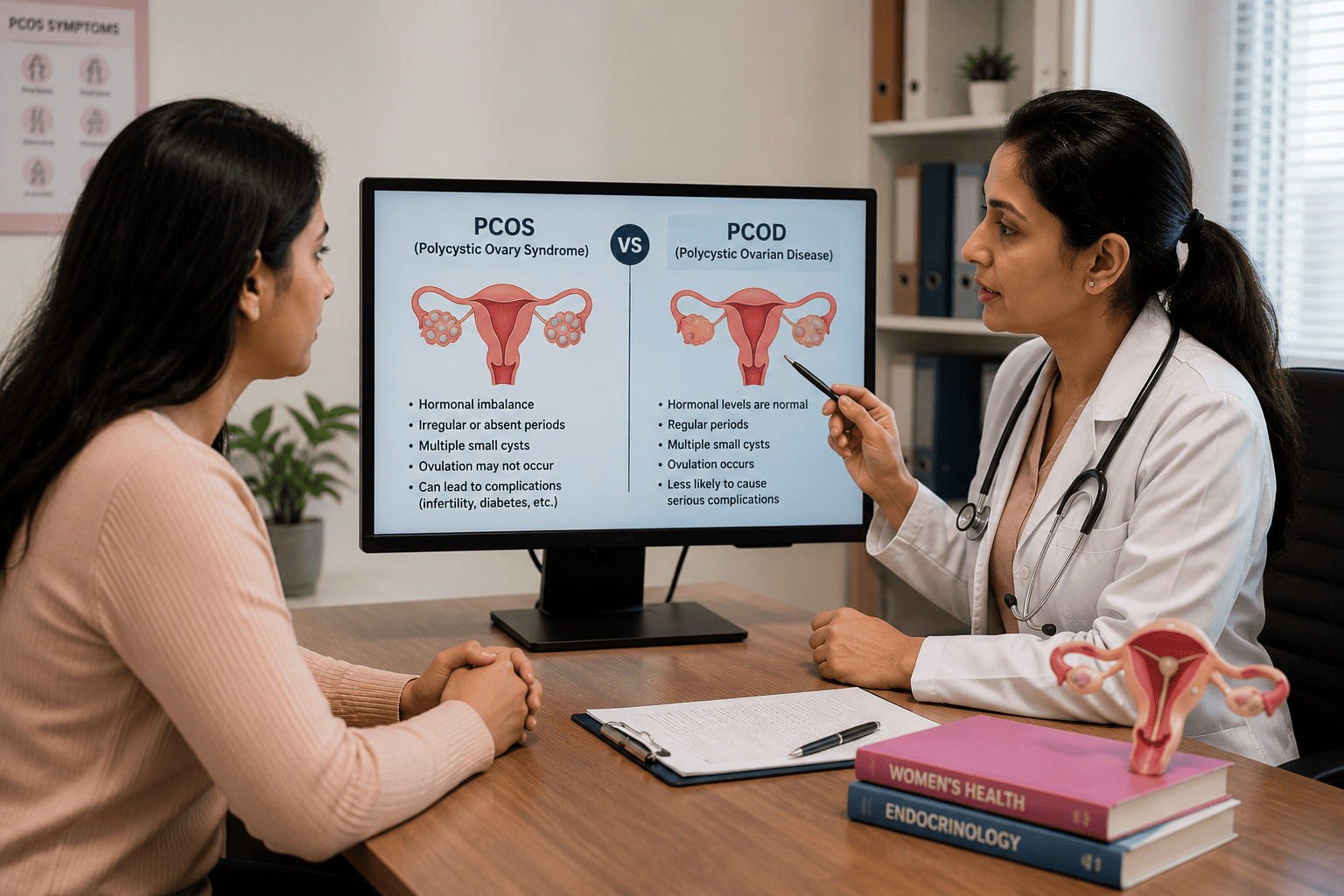
PCOD stands for Polycystic Ovarian Disease. It affects the ovaries. In PCOD, the ovaries release immature eggs. Over time, these eggs become cysts. The ovaries then become enlarged.
This is very common in women today. Lifestyle habits play a big role. Poor diet, stress, and low activity contribute. Hormonal imbalance is also a key cause.
The good news? PCOD is manageable. It is not classified as a disease by many doctors. With the right lifestyle changes, symptoms can be reduced significantly.
What Is PCOS?
PCOS stands for Polycystic Ovary Syndrome. It is a more complex condition. It is a metabolic and endocrine disorder. This means it affects your whole body. Not just your ovaries.
In PCOS, the body produces excess androgens. Androgens are male hormones. Even women have them in small amounts. But in PCOS, levels are too high. This disrupts the entire hormonal system.
PCOS affects many organs and functions. It impacts insulin levels, metabolism, and fertility. It requires long-term management and medical care.
PCOS vs PCOD Difference: Side by Side
Here is a clear comparison.
| Factor | PCOD | PCOS |
| Type | Condition | Syndrome / Disorder |
| Cause | Hormonal imbalance, lifestyle | Endocrine system dysfunction |
| Severity | Milder | More serious |
| Fertility impact | Moderate | Higher impact |
| Treatment | Lifestyle changes help | Requires medical management |
| Prevalence | More common | Less common but more serious |
PCOD Symptoms in Women
PCOD symptoms can be easy to miss. They often seem unrelated at first. Here are the most common signs.
Irregular periods — Cycles become unpredictable. Periods may come late or get skipped entirely.
Weight gain — Especially around the belly area. This happens even without eating much.
Acne and oily skin — Hormones trigger excess oil production. Breakouts appear on the face, chest, and back.
Hair fall — Thinning hair is common. It usually follows a male pattern.
Facial hair — Unwanted hair grows on the chin, upper lip, or cheeks.
Bloating — Enlarged ovaries cause a feeling of fullness. Mild pelvic pain is also common.
Mood swings — Hormonal changes affect mental health. Anxiety and low mood are frequently reported.
If you notice three or more of these signs, consult a doctor. Early detection makes treatment easier.
PCOS Symptoms and Treatment
PCOS symptoms are more intense. They affect more body systems. Here is what to watch for.
Severe irregular periods — Periods may be absent for months. Some women stop menstruating entirely.
Excess androgen levels — This shows up as body hair, acne, and voice changes. Blood tests confirm elevated levels.
Multiple ovarian cysts — Ultrasound reveals many small cysts. These are undeveloped follicles.
Insulin resistance — The body cannot use insulin properly. Blood sugar levels rise. This raises the risk of Type 2 diabetes.
Unexplained weight gain — Weight piles on quickly. It is hard to lose despite effort.
Infertility — PCOS is one of the leading causes of female infertility. Ovulation becomes irregular or stops.
Dark skin patches — Patches appear in the neck, armpits, or groin. This is linked to insulin resistance.
Sleep problems — Sleep apnea is common in women with PCOS. Poor sleep worsens other symptoms.
PCOS Treatment Options
There is no single cure for PCOS. But it is very treatable. Treatment focuses on managing symptoms.
Lifestyle changes — Diet and exercise are the first step. Even a 5–10% weight loss improves symptoms. Low-carb diets reduce insulin resistance.
Medications — Doctors may prescribe hormonal birth control. This regulates periods and lowers androgen levels. Metformin helps manage insulin resistance.
Fertility treatments — Medications like Clomiphene can trigger ovulation. IVF is an option for severe cases.
Anti-androgen medications — These reduce excess hair growth and acne. They are used when hormonal pills are not enough.
Mental health support — Therapy and counselling help manage anxiety and depression. These are important parts of treatment.
PCOS vs PCOD: Which Is More Serious?
This is the most common question women ask. The answer is clear.
PCOS is more serious than PCOD.
Here is why.
PCOD is a condition. It can be controlled through diet and lifestyle. Many women manage it without long-term medication. It does not always affect fertility severely.
PCOS is a syndrome. It affects the entire endocrine system. It increases the risk of serious health problems. These include Type 2 diabetes, heart disease, high blood pressure, and endometrial cancer. It requires consistent medical supervision.
PCOS also has a greater impact on mental health. Studies show higher rates of depression and anxiety in women with PCOS. This makes comprehensive care even more important.
That said, both conditions deserve attention. Neither should be ignored. Early care always leads to better outcomes.
Can Women with PCOS Get Pregnant?
Yes. Absolutely. Many women with PCOS have healthy pregnancies.
The condition makes conception more challenging. But it does not make it impossible. With the right treatment, pregnancy is very achievable.
Here is what helps.
Tracking ovulation — Apps and ovulation kits help identify fertile windows. Some women with PCOS do ovulate, just less regularly.
Medications — Letrozole and Clomiphene are commonly prescribed. They stimulate ovulation effectively.
Weight management — Losing even a small amount of weight can restore ovulation. Many women conceive naturally after this.
IUI and IVF — Assisted reproduction is available for those who need extra support. Success rates are good with proper medical care.
Managing insulin resistance — Metformin helps the body respond to insulin better. This can restore ovulation in some women.
The key is not to wait. See a specialist early. The sooner PCOS is treated, the better the fertility outcomes.
When Should You See a Doctor?
Do not wait for symptoms to get worse. See a doctor if you notice:
- Periods are irregular or missing
- You are trying to conceive without success
- Sudden weight gain with no clear reason
- Excessive hair growth or hair fall
- Skin changes like acne or dark patches
These are warning signs. They deserve professional attention.
Get Expert Care at SK Women’s Clinic, Bangalore
Living with PCOS or PCOD is challenging. But you do not have to figure it out alone. The right doctor makes all the difference.
At SK Women’s Clinic, women get personalised, compassionate care. Every woman’s body is different. Treatment plans are built around your specific needs.
From diagnosis to fertility support, the team is here for you. You deserve clear answers and a path forward.
If you are looking for the best gynecologist in Bangalore, SK Women’s Clinic offers expert women’s healthcare with a warm, patient-first approach.
Book your consultation today. Your health cannot wait.